
Choosing copper network cable for a commercial building comes down to five checks, starting with the copper cable categories chart: Cat6 is the TDRA minimum for new installations of a building's telecom network, and Cat6A suits Wi-Fi and 10 Gbps. Then choose UTP or a bonded screen, a halogen-free jacket, solid copper rather than copper-clad aluminium, and outdoor-rated cable outside.
The outlet-by-outlet category choice is in Cat6 vs Cat6A for a new office, and the whole system in what structured cabling is; this guide covers the cable itself.
Copper cable categories chart: Cat5e, Cat6, Cat6A, Cat7 and Cat8
A category is a performance grade for the cable and its connectors, set by the highest frequency it is specified to: the higher the frequency, the faster the Ethernet it carries over a given length. TIA grades cable and connectors by category; ISO/IEC 11801 uses categories for components and classes for the installed channel, and Fluke Networks, a maker of cable certification testers, tabulates how they match.
| Category | ISO/IEC class | Specified to (MHz) | Fastest Ethernet and reach | Where it fits |
|---|---|---|---|---|
| Cat5e | Class D | 100 | 1, 2.5 and 5 Gbps to 100 m | Existing installations that still test well; below the TDRA minimum for new installations |
| Cat6 | Class E | 250 | 5 Gbps to 100 m; 10 Gbps to 55 m | Desks, phones, printers, low-power PoE devices |
| Cat6A | Class EA | 500 | 10 Gbps to 100 m | Wi-Fi access points, 10 Gbps links, high-power PoE |
| Cat7 (ISO only) | Class F | 600 | 10 Gbps to 100 m | Shielded LANs in parts of Europe; GG45 or TERA connectors |
| Cat7A (ISO only) | Class FA | 1,000 | 10 Gbps; 40GBASE-T went to Cat8 | AV systems and some European LANs |
| Cat8 | Class I and II | 2,000 | 25 and 40 Gbps to 30 m | Short links between racks |
The Cat6 figure at 10 Gbps is the IEEE 10GBASE-T objective of "at least 55 m to 100 m" on Class E, and the Ethernet Alliance explains that 55 m was set for unscreened cable. The 2.5 and 5 Gbps reaches are IEEE 802.3bz objectives "on defined use cases". Cat7 and Cat7A were never recognised by TIA, and IEEE defined 40GBASE-T on Category 8 instead.
Cat5e vs Cat6 vs Cat6A vs Cat7 vs Cat8: which to buy
For a new commercial building, Cat6 or Cat6A. The TDRA Buildings Telecommunications Network Specification Manual says new installations of a building's telecom network "shall be based upon a minimum of category 6" (cabling inside a tenant's space, beyond the tenant equipment, is outside its scope, and a tenant fit-out follows its project specification), so Cat5e belongs to existing installations that still test well. Cat6A belongs at Wi-Fi access points, 10 Gbps links and high-power PoE bundles. Cat7 and Cat7A carry the same 10 Gbps as Cat6A outside the TIA system, and Cat8's 30 m (IEEE 802.3bq-2016) suits links between racks, not a 90 m run to a desk.
UTP vs FTP cable: what the shielding names mean
The name says where the metal is. Datasheets, and the Siemon white paper on screened cabling, write it in two parts around a slash: before it, the screen around all four pairs; after it, the screen on each pair. U means none, F foil and S braid.
| Name | Around all four pairs | Around each pair | Typical categories (Siemon) |
|---|---|---|---|
| U/UTP | Nothing | Nothing | Unscreened Cat5e, Cat6 and Cat6A ("UTP") |
| F/UTP | Foil | Nothing | Screened Cat6 and Cat6A, also called "FTP" |
| U/FTP | Nothing | Foil | Cat6A and below |
| S/FTP | Braid | Foil | Cat7 and Cat7A |
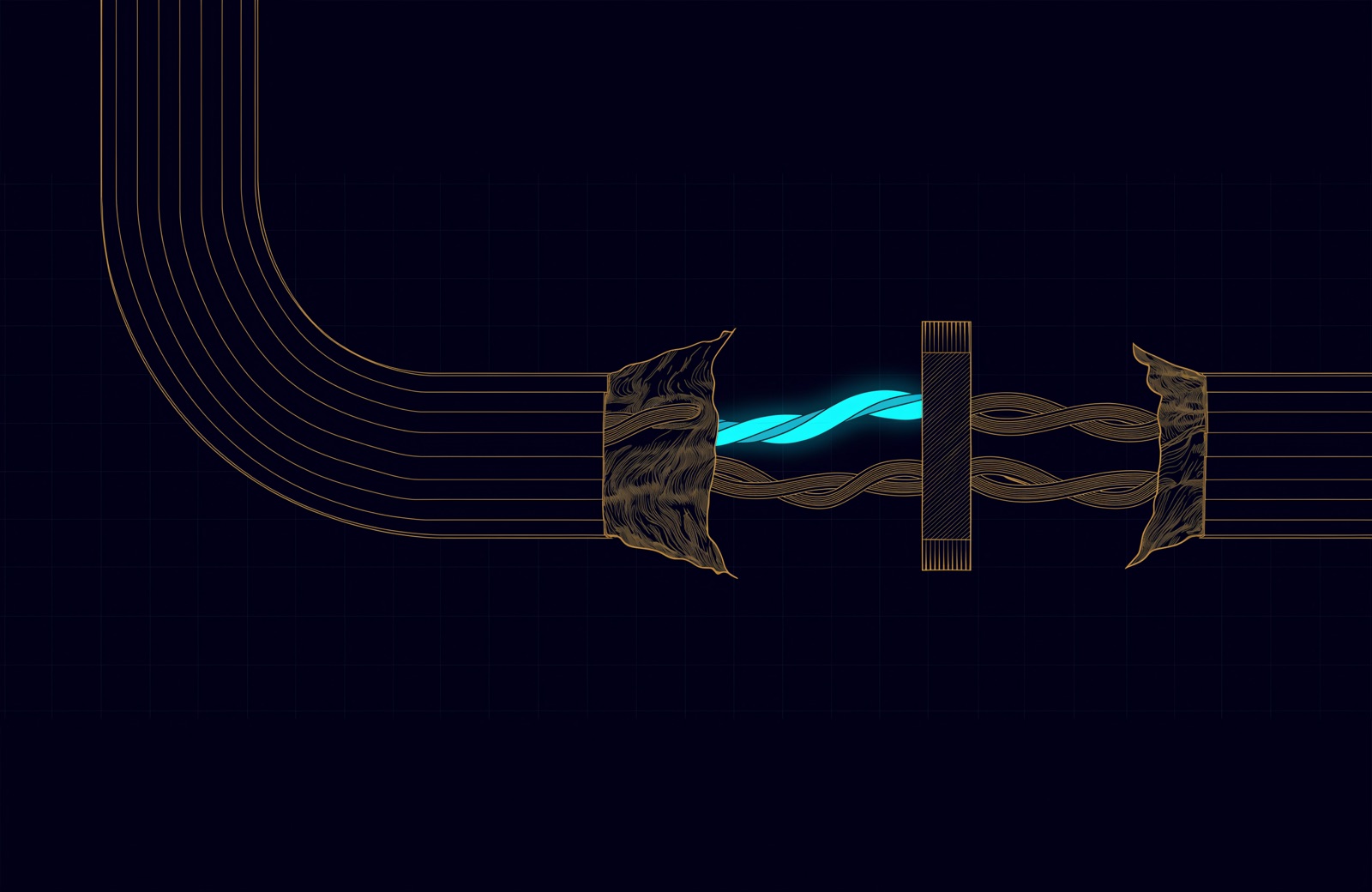
Under the jacket, every four-pair cable holds eight insulated copper conductors twisted into pairs, often kept apart by a separator that, in Siemon's datasheet wording, "maintains pair geometry". Some screened cables add a drain wire, which Siemon says lowers the screen's end-to-end resistance once it is bonded.
Siemon, a cabling manufacturer, reports that the overall foil gives Category 6A F/UTP far better alien crosstalk performance (noise picked up from neighbouring cables) than Category 6A UTP, and that per-pair foils also cut crosstalk between pairs inside one cable. The TDRA manual leaves the choice open: where Category 6A is specified, "unshielded twisted pair (UTP) or shielded twisted pair (STP) may be utilized".
Does shielded network cable need earthing?
Yes. A screen gives its full benefit only when it runs unbroken end to end and is bonded to the telecom earth where the cables terminate. Siemon summarises the TIA and ISO requirement: "the cable shield shall be bonded" to the bonding busbar "at the location where the cables are terminated in the rack". The bonding system itself is defined in ANSI/TIA-607, now TIA-607-E (May 2024), which supersedes the 607-D edition Siemon cites.
- Bond the panel. Screened jacks clip into a screened patch panel bonded to the busbar; Siemon suggests at least 12 AWG where the manufacturer specifies nothing, and below 1 Ω from panel or rack to busbar.
- Keep the screen continuous. Siemon does not recommend UTP patch cords in a screened system.
- One type per system. For the copper a developer runs from a consolidation cabinet to the outlets, the TDRA manual requires components to be "of the same category (6 or 6A) and type (UTP or STP), and from a single manufacturer".
An unbonded screen is not the antenna it is often said to be (Siemon's results show it still reduces high-frequency noise), but it does not deliver what it was bought for, so the bond belongs in the cabling scope.
LSZH or PVC: which cable jacket?
Halogen-free, for fixed cabling inside a building the TDRA manual covers. Its section 5.10 states that "all fixed and permanently installed telecom cables within a building shall be halogen-free, achieve a minimum rating of Euroclass Cca-s1b, d2, a2 when tested in accordance with BS EN 13501-6 and be CE marked". Other cables, patch cords included, must at least meet IEC/EN 60332-1-2. A tenant's own fit-out follows its project specification.
- PVC (polyvinyl chloride) contains chlorine, a halogen; LSZH (low smoke, zero halogen, also LS0H or LSOH) jackets are made without halogens.
- Halogen acid gas from burning cable material is measured by IEC 60754-1, and smoke density by IEC 61034-2.
- Flame spread of a single cable is IEC 60332-1-2; the IEC notes that passing it does not cover cables installed as a group, which is the IEC 60332-3 series.
- Euroclasses come from the EU Construction Products Regulation: seven classes, Aca to Fca, by flame spread and heat release, plus ratings for smoke (s), flaming droplets (d) and acidity (a) (Europacable). A datasheet should state the class, not only "LSZH".
The UAE Fire and Life Safety Code of Practice (2018) names such cable in its smoke control chapter: in an air-handling unit room used as a plenum, cables must be listed to smoke and flame limits tested under NFPA 262, run in metal raceway or metal-sheathed cable, or "comply with low smoke (LSF) to BS EN 61034-1 and zero halogen (LSOH) to IEC 60754-1 and BS EN 50267" (Chapter 10, Table 10.1). BSI withdrew BS EN 50267-2-1, the halogen acid gas procedure, in 2017; IEC 60754-1, which the code also names, covers that test. For a given building, the consultant's specification and the Civil Defence approval decide.
| Where the cable runs | What the document asks for | Source |
|---|---|---|
| Fixed telecom cables inside the building | Halogen-free, Euroclass Cca-s1b, d2, a2 minimum, CE marked | TDRA manual, 5.10 |
| Patch cords and other cables | IEC/EN 60332-1-2 minimum | TDRA manual, 5.10 |
| Air-handling unit room used as a plenum | NFPA 262 listing, metal raceway or sheath, or LSF and LSOH | UAE fire code, Table 10.1 |
| Outdoor cable entering a building | Change to indoor cable within 2 m of entry where the outdoor sheath is not suited indoors | TDRA manual, 4.5.1.5; EN 50174-2 |
Solid or stranded conductors?
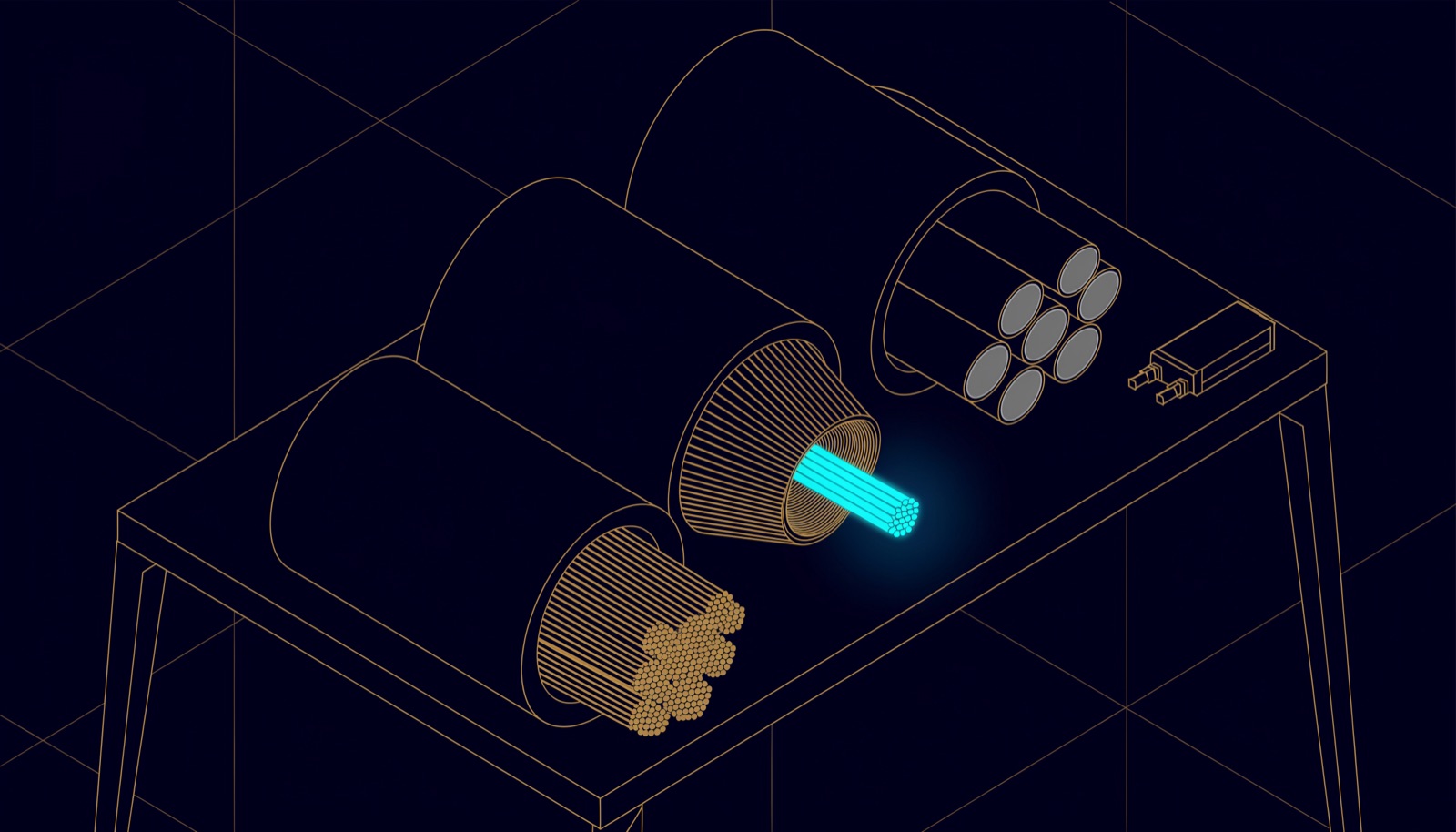
Solid for the fixed link, stranded for cords that move. For the 90 m permanent link, "both TIA and ISO/IEC standards require solid wire cable", Fluke Networks notes; stranded cable is for patch cords, normally 10 m of a 100 m channel; how to colour and label them in the rack is in our patch cord colour code guide. Stranded conductors bend better but show 20 to 50% more attenuation (20% at 24 AWG, 50% at 26 AWG) and higher DC resistance. For PoE devices in ceilings that are not temperature-controlled, such as access points and cameras, Fluke recommends solid cords, or stranded ones of about 5 m or less.
A typical Category 6 datasheet, such as Siemon's, gives 23 AWG solid bare copper and a DC resistance below 9.38 Ω per 100 m: look for both lines.
Outdoor network cable: gel-filled and UV-resistant
An outdoor run needs outside plant (OSP) cable, with a sunlight-resistant jacket and a core that keeps water out. Siemon's Category 6 OSP cable, for example, has a UV-resistant polyolefin jacket and a separator "filled with a non-conductive water-blocking gel", and is approved for direct burial, aerial and underground conduit.
Those jackets are not for long indoor runs. For service provider cables, the TDRA manual puts the change to indoor cable at the building entry point, "within 2 m of the cable exiting the duct", where the outdoor sheath "is not suitable for installation within buildings" (clause 4.5.1.5). EN 50174-2:2018, quoted in Europacable's CPR FAQ, has IT cables that do not meet EN 60332-1-2 terminated within 2 m of entry (unless local regulations differ) or carried on in conduit that acts as a fire barrier. Beyond the 100 m channel, use fibre.
The copper-clad aluminium trap
Copper-clad aluminium (CCA) cable has an aluminium core under a copper coating. It is cheaper and sometimes printed with a category, but it is not category cable: the standards requiring solid copper conductors in communications cables include TIA-568-C.2 and ISO/IEC 11801 ed. 2.2 (both editions since superseded; current datasheets such as Siemon's cite ANSI/TIA-568.2-E and ISO/IEC 11801-1), as Frank Peri, founding director of the Communications Cable and Connectivity Association, says in a Fluke Networks application note. It fails where buildings now lean on copper most, PoE:
- Resistance. Aluminium has about 55% more resistance than copper of the same diameter, so more PoE power becomes heat and less voltage reaches the device. PoE is specified for a worst-case loop resistance of 12.5 Ω per pairset (Ethernet Alliance), and a Type 4 port already allows 18.7 W of its 90 W for loss in a compliant cable.
- Heat. IEEE's PoE temperature derating was set for solid copper cable: "no allowance is made for the much greater heating that would occur in a CCA cable", the note says.
- Resistance unbalance. Field data cited by Fluke "suggests that CCA cable fails DC Resistance Unbalance, regardless of length": the test that both wires of a pair share PoE current equally, with a channel limit of 0.20 Ω or 3%.
To spot it, scrape a conductor: silver under the copper means aluminium. Fluke warns that weighing the box is unreliable, as ballast has been reported in boxes. The dependable check is a certification test that includes DC resistance unbalance, on a sample from the delivered reel.
What to check on a cable quotation
Six lines on the quotation or datasheet settle most of it.
| Line on the quotation or datasheet | What to look for | Why |
|---|---|---|
| Category | Cat6 (Class E) or Cat6A (Class EA) to TIA-568 or ISO/IEC 11801 | Cat6e does not appear in the TIA or ISO/IEC category tables; Cat7 and Cat7A are ISO only |
| Construction | U/UTP, F/UTP, U/FTP or S/FTP, the same throughout | A screen needs screened jacks, panels, cords and a bond |
| Conductor | Solid bare copper, with its gauge | CCA fails PoE and the category standards |
| DC resistance (Ω per 100 m) | Stated on the datasheet | Higher resistance means more PoE heat |
| Jacket | Halogen-free, with a declared Euroclass and CE mark | TDRA asks for Cca-s1b, d2, a2 at least |
| Outdoor sections | OSP cable, gel-filled or water-blocked, UV-resistant | Indoor jackets are not made for sun or water |
How UBM handles it
UBM installs Cat6 and Cat6A permanent links as part of its network and structured cabling work, with containment, earthing and labelling in the same scope. The cable is settled on paper before anything is ordered: category per outlet type, UTP or screened, jacket rating and solid copper conductors, named by manufacturer and part number. Norden is the structured copper brand on our partners list, and authorisation levels are confirmed in writing at quotation. Where a screened system is chosen, panels are bonded to the rack and the rack to the telecom earth. Every link is certified to its category, and the results go into the handover pack with the as-built drawings. To have a cable specification, a quotation or an installation reviewed, talk to a UBM engineer.
Questions people ask
What is the difference between Cat5e, Cat6, Cat6A, Cat7 and Cat8?
The frequency each is specified to: 100, 250, 500, 600 (1,000 for Cat7A) and 2,000 MHz. Cat5e carries 2.5 Gbps, and 5 Gbps on defined use cases, to 100 m, Cat6 5 Gbps to 100 m and 10 Gbps to 55 m, Cat6A 10 Gbps to 100 m, and Cat8 40 Gbps to 30 m. Cat7 and Cat7A are ISO-only.
Is FTP cable better than UTP?
It resists alien crosstalk and outside noise better, and gives its full benefit only with screened jacks, panels and cords throughout and a bond to the telecom earth. The TDRA manual allows UTP or STP where Category 6A is specified.
Is LSZH cable required in the UAE?
Where the TDRA manual applies, fixed telecom cables inside the building must be halogen-free, at least Euroclass Cca-s1b, d2, a2, and CE marked. The UAE fire code lists LSF and LSOH cable as one of the permitted options in air-handling unit rooms used as plenums, alongside NFPA 262-listed cable and metal raceway.
How can I tell if a network cable is copper-clad aluminium?
Scrape a conductor: silver under the copper means aluminium. Box weight is unreliable; a certification test with DC resistance unbalance is the dependable check.
Can I use indoor network cable outdoors?
Not for exposed or buried runs. Use outside plant cable with a UV-resistant jacket and water blocking, and change to indoor-rated cable within 2 m of entering the building, as EN 50174-2 sets out for cables that do not meet EN 60332-1-2.
Sources
- Buildings Telecommunications Network Specification Manual: Guidelines for FTTx in new Buildings, V3.0 (TDRA, 2024)
- UAE Fire and Life Safety Code of Practice, September 2018 edition (UAE Civil Defence, 2018)
- Bandwidth and Data Rates (Fluke Networks, 2019)
- What Ever Happened to Category 7? (Fluke Networks, 2018)
- IEEE 802.3 10GBASE-T Study Group Objectives (IEEE 802.3, 2003; the resulting IEEE 802.3an is now part of IEEE Std 802.3)
- 10GBASE-T: 10 Gigabit Ethernet over Twisted-pair Copper, Version 1.0 (Ethernet Alliance, 2007)
- IEEE 802.3 NGEABT (2.5G/5GBASE-T) Objectives (IEEE 802.3, 2015)
- IEEE 802.3bq-2016, 25GBASE-T and 40GBASE-T (IEEE, 2016; superseded)
- Screened and Shielded Cabling: Noise Immunity, Grounding, and the Antenna Myth (Siemon, 2022)
- ANSI/TIA-607-E, Generic Telecommunications Bonding and Grounding (Earthing) for Customer Premises (TIA, 2024)
- IEC 60754-1:2011, Test on gases evolved during combustion of materials from cables: halogen acid gas content (IEC, 2011, amended 2019)
- BS EN 50267-2-1:1999, Determination of the amount of halogen acid gas (BSI, 1999; withdrawn 2017)
- IEC 61034-2:2005+AMD1:2013+AMD2:2019, Measurement of smoke density of cables burning under defined conditions (IEC, 2019)
- IEC 60332-1-2:2025, Test for vertical flame propagation for a single insulated wire or cable (IEC, 2025)
- Understanding CPR Cable Classification and Certification (Europacable, accessed 2026)
- CPR FAQ, quoting EN 50174-2:2018 clause 4.1.6.2.3 on outdoor cables entering buildings (Europacable, accessed 2026)
- Stranded vs. Solid Wire Cable: How to Choose (Fluke Networks, 2024)
- Solution 6 OSP UTP Cable specification sheet (Siemon, 2025)
- CCA Wire: What Is Copper Clad Aluminum Cable? (Fluke Networks, application note, accessed 2026)
- Tips to Identify Copper Clad Aluminium (CCA) Cables (Fluke Networks, 2017)
- Overview of 802.3bt, Power over Ethernet standard (Ethernet Alliance, 2019)
Comments
Questions and experience from readers. A person reads every comment before it appears.
No comments yet. If something here does not match what you have seen on site, say so.