
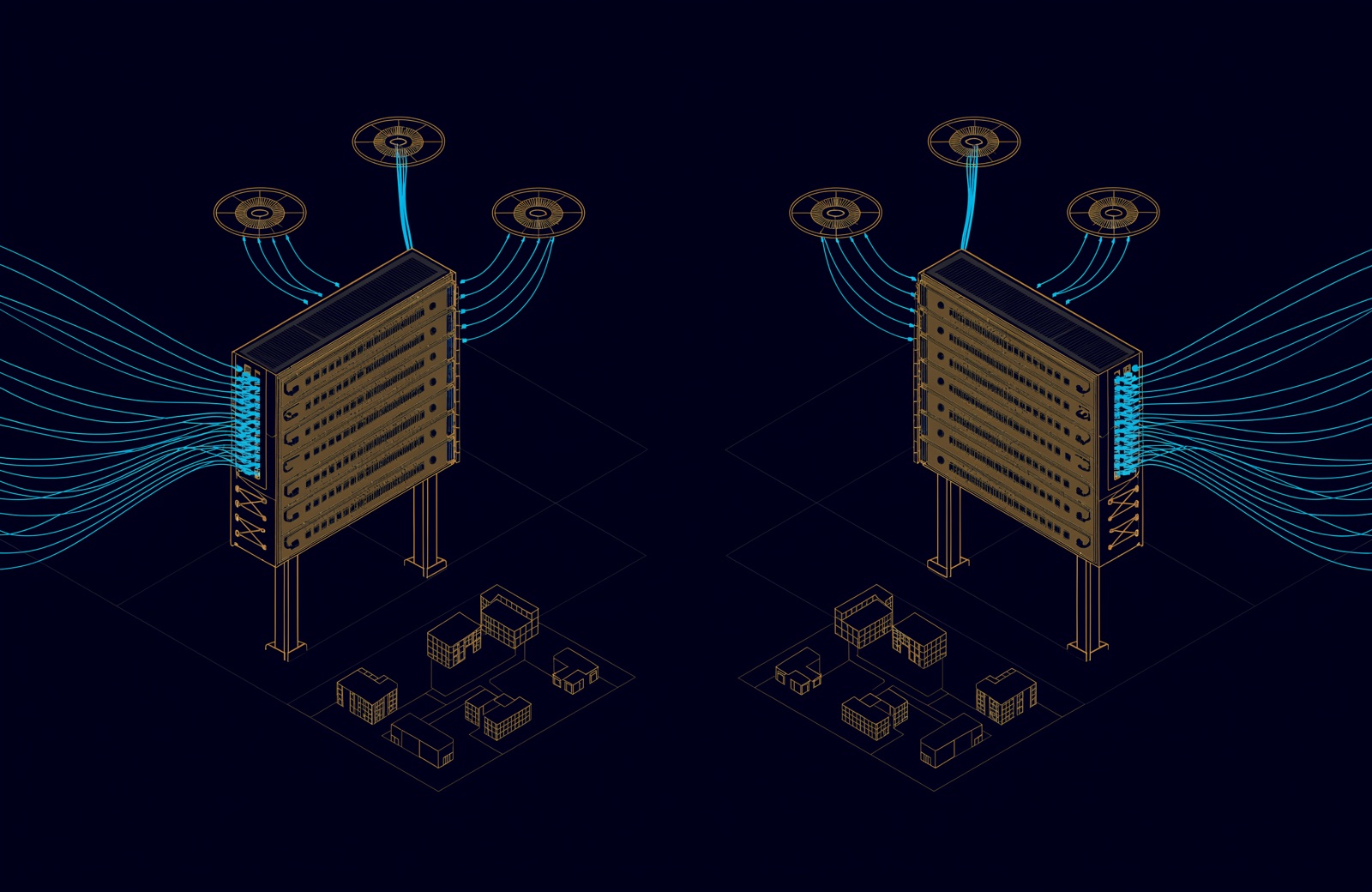
For a UAE company weighing Huawei vs Cisco switches and Wi-Fi, the hardware rarely decides it: both cover campus core, access, Wi-Fi 7 and central management. Four things do: whether you hold or bid for US federal contracts, what you already run, how each software licence behaves when its term ends, and the support terms that apply in the UAE.
UBM supplies both, alongside Ruijie and Netgear (see our vendor partners), so this compares by scenario rather than naming a winner. Every product name, licence term and rule below comes from the vendor's or the regulator's own document, dated under Sources.
Huawei vs Cisco switches and Wi-Fi: the two portfolios, layer by layer
Both sell a complete campus network, and the names differ more than the layers do. Huawei groups its enterprise network into four "engines": AirEngine Wi-Fi (Huawei's Wi-Fi brand since April 2019), CloudEngine switches, NetEngine routers and HiSecEngine network security. Cisco's campus line is the Catalyst 9000 family, its newer C9000 smart switches, Cisco Wireless access points and the cloud-managed Meraki range.
| Layer | Huawei | Cisco |
|---|---|---|
| Campus core | CloudEngine S12700E | C9610 and C9550 smart switches |
| Aggregation | CloudEngine S6700 (10GE routing aggregation) | C9550 (core and aggregation) |
| Access | CloudEngine S5700 (GE access) | Catalyst 9300 and C9350 (fixed access); Meraki MS for cloud-managed sites |
| Wi-Fi | AirEngine access points, Wi-Fi 7 models since 2022 | Cisco Wireless access points, Wi-Fi 7 models such as the 9176 series |
| Campus management | iMaster NCE-Campus, plus CampusInsight analysis | Catalyst Center on premises, or the Meraki Dashboard in the cloud |
| Data centre switching | CloudEngine data centre switches | Nexus 9000 |
| Software licence model | N1: perpetual licence plus SnS (software subscription and support); Huawei also sells conventional and RTU licences | Switches: perpetual base licence plus a term subscription; Wi-Fi 7 access points: Cisco Networking Subscription; Meraki: term licences per device |
Huawei announced its CloudEngine S campus series in June 2019 (S5700 for access, S6700 for aggregation, S12700E for the core) and launched an all-scenario range of AirEngine Wi-Fi 7 access points on 16 November 2023 (its first enterprise Wi-Fi 7 access point dates from 2022). Cisco describes the C9350 as a fixed access platform for campus and branch networks, and the C9550 as switching for enterprise core and aggregation. For buyers weighing Huawei as a Cisco alternative for switches, the layers line up one to one; the differences are in licensing, management and support.
One difference in approach: Cisco offers two management worlds, Catalyst Center on premises and the Meraki Dashboard in the cloud, and its C9350 switches and Wi-Fi 7 access points can run under either. Huawei's licensed campus features are activated on iMaster NCE-Campus.
Licensing: perpetual plus support, or a term subscription
This is where the two differ most, and the question to ask is what keeps working when you stop paying. Huawei's N1 model sells a perpetual licence with a renewable support and upgrade term; Cisco's switches combine a perpetual base licence with a term subscription, while its Wi-Fi 7 access points and Meraki devices are licensed by term.
Huawei: N1 packages, a perpetual licence plus SnS
Huawei's N1 model (IDN One Software) sells campus software in packages that can be migrated to new hardware. Its licence guide for CloudEngine S switches (updated April 2026) calls this "perpetual license + SnS": the first purchase includes the licence and SnS for a set period, and SnS is then renewable, paid periodically. If SnS lapses, the functions licensed for the current version keep working, but new versions and patches, hotline support and licence migration stop. Huawei adds that the switches' basic software can be upgraded without SnS.
- Foundation package: basic network and access management, with automatic deployment and access authentication.
- Advanced package: adds automated virtual networks, free mobility, terminal plug-and-play and CampusInsight analysis. It is mandatory for core switches and optional for access and aggregation.
Both packages are activated on iMaster NCE-Campus; the switches' basic software comes preloaded.
Cisco: base licence plus subscription on switches, term licences elsewhere
For the Catalyst 9300, Cisco's ordering guide (September 2026) makes two licences mandatory at purchase: perpetual Network Essentials or Network Advantage, and a Cisco Catalyst or Cisco DNA subscription (Essentials or Advantage) for 3, 5 or 7 years. Its data sheet says that when the subscription ends, you renew it, or deactivate it and reload the switch "to continue operating with the base license capabilities".
The newer C9350, C9550 and C9610 smart switches and Cisco's Wi-Fi 7 access points use Cisco Networking Subscription: Essentials or Advantage, with a minimum term of 36 months, plus a perpetual Switching OS licence on the smart switches. Its data sheet (September 2026) says that on expiry switches keep their on-device features, while wireless devices "continue to operate and pass network traffic" but management "may be limited or unavailable" and the included support ends. That support is consistent with Cisco Support Basic and excludes RMA, the hardware replacement service.
Meraki's co-termination licensing (the default model) and per-device licensing (now limited to existing customers) behave differently. For Meraki-managed Catalyst 9300-M switches, Cisco's ordering guide lists terms of 1, 3, 5, 7 or 10 years, and Meraki's licensing FAQ says hardware on either model becomes non-operational without sufficient licences and no longer passes traffic to the internet.
| Licence model | What you buy | Term (years) | If it is not renewed |
|---|---|---|---|
| Huawei N1 (CloudEngine S switches) | Perpetual licence plus SnS | SnS, renewable | Licensed functions keep running; upgrades, hotline support and licence migration stop |
| Cisco Catalyst 9300 | Perpetual Network Essentials or Advantage, plus a Catalyst or DNA subscription | 3, 5 or 7 | Runs on the base licence; add-on features end |
| Cisco Networking Subscription (smart switches, Wi-Fi 7 access points) | Essentials or Advantage; perpetual Switching OS licence on smart switches | 3 minimum (36 months) | Keeps passing traffic; management may be limited; included support ends |
| Meraki co-term or per-device | Licences per device, in the Meraki Dashboard | 1, 3, 5, 7 or 10 (Catalyst 9300-M) | Non-operational; no traffic to the internet |
So record every renewal date in the handover pack, and compare quotes over the same term: five years of Cisco subscription against a shorter period of Huawei SnS is not a like-for-like price.
Management: on premises, in the cloud, or both
Choose the management model with the people who will run it. Catalyst Center, formerly Cisco DNA Center, is a self-hosted dashboard that runs as a physical appliance, as a virtual appliance on VMware ESXi or Ubuntu KVM, or on AWS or Microsoft Azure; the Meraki Dashboard is Cisco's cloud option. Huawei's N1 features are activated on iMaster NCE-Campus. Settle three things first: where management data must be held, who makes the daily changes, and whether branches will run without an engineer on site. If your security team uses Splunk, note that Cisco completed its acquisition of Splunk on 18 March 2024, and ask either vendor how network logs will reach it.
Wi-Fi 7 on either platform in the UAE
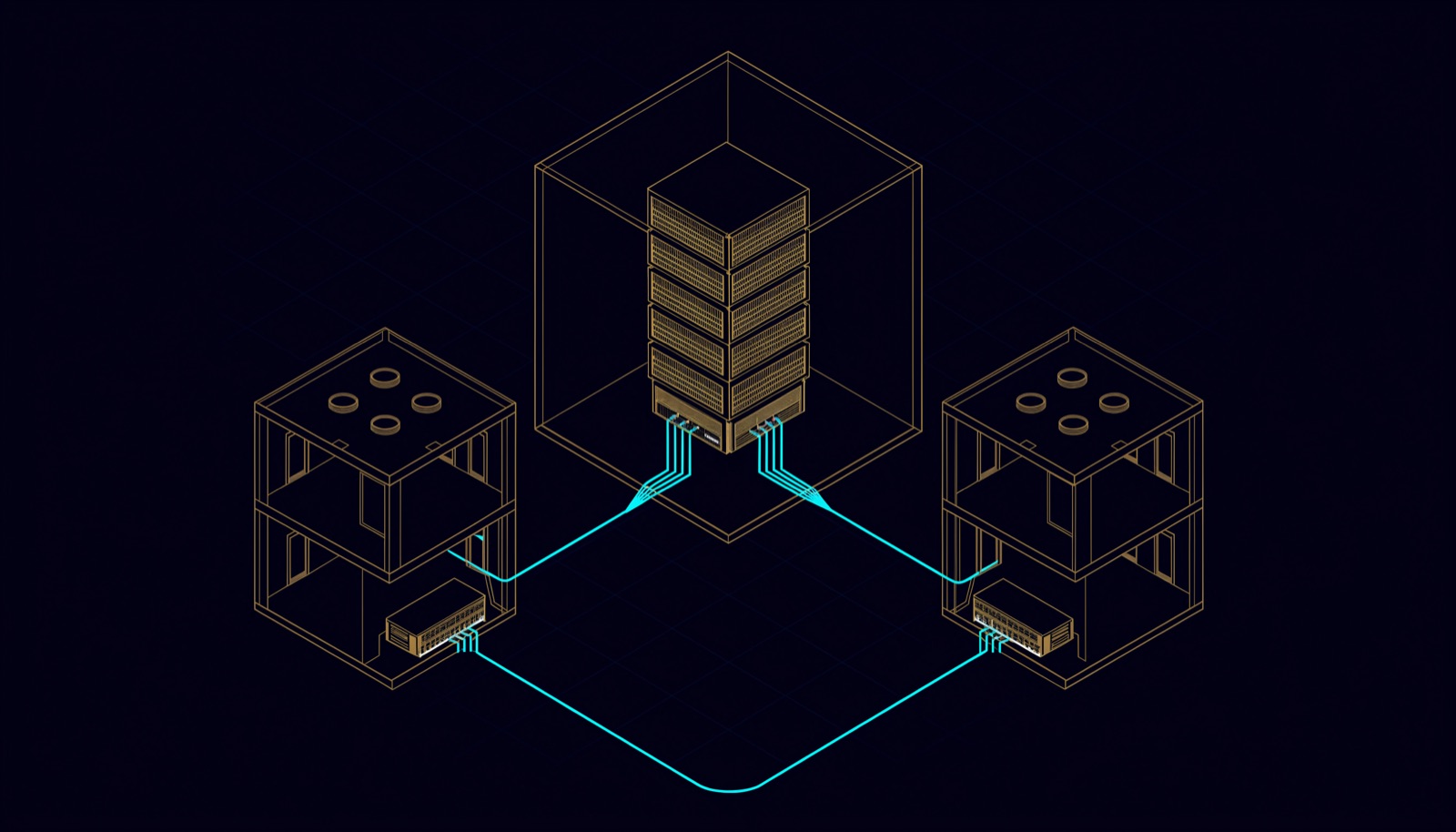
The same UAE rules apply to both brands. TDRA opened 5925-6425 MHz for indoor Wi-Fi on 27 December 2020, at up to 250 mW EIRP under class authorisation, and that 500 MHz fits one 320 MHz Wi-Fi 7 channel at most. Every access point model must also be "registered with TDRA before it can be used, sold or distributed in the UAE"; TDRA's approved equipment list is updated every 24 hours and searchable by model, so check the model numbers in any quote. For the cabling, see Cat6 or Cat6A for a new UAE office; for capacity, campus wireless for the morning everyone arrives.
Do US restrictions on Huawei affect a UAE company?
In defined cases: when it holds or bids for US federal contracts, buys or imports the same equipment for sites in the United States, or exports US-regulated items to Huawei. Each rule does something different.
| Rule | Issued by, and date | What it does | When it matters in the UAE |
|---|---|---|---|
| Entity List entry for Huawei and its listed non-US affiliates | US Department of Commerce (BIS); first entry (Huawei and 68 affiliates) effective 16 May 2019, with more affiliates added in August 2019 and August 2020 | Licence required for all items subject to the US Export Administration Regulations, with a presumption of denial | When you export, re-export or transfer US-regulated items to Huawei |
| Section 889, through FAR 52.204-25 | US Congress (Section 889 of the NDAA for Fiscal Year 2019), implemented in the FAR; prohibitions effective 13 August 2019 and 13 August 2020 | US agencies may not obtain equipment, systems or services that use covered equipment as a substantial or essential component, or contract with an entity that uses them | When you hold or bid for US federal contracts |
| FCC Covered List rules (FCC 22-84, then 90 FR 53227 and DA 26-635) | US Federal Communications Commission; FCC 22-84 effective 6 February 2023; importation and marketing ban on previously authorised equipment effective 16 July 2026 | No new authorisations for covered equipment, and no importation or marketing of it in the United States, including models authorised before the 2022 rules; equipment already legally bought may still be used | When you buy, import or ship the same equipment for sites in the United States |
| TDRA type approval | UAE Telecommunications and Digital Government Regulatory Authority | Equipment must be registered before it is used, sold or distributed in the UAE | For every access point and radio device, from either vendor |
FAR 52.204-25 also covers ZTE, and video surveillance and telecommunications equipment from Hytera, Hikvision and Dahua used for the security purposes the clause lists, so an organisation in scope should review its cameras too (see our CCTV system guide for UAE businesses). Check any vendor policy of your own, or your parent company's, before design starts.
| Scenario | Where the path lands | Why |
|---|---|---|
| A US contractor: holds or bids for US federal contracts | Check compliance first | FAR 52.204-25 looks at equipment the contractor uses, not just what it sells |
| A group with sites in the United States | Check compliance first, for those sites | FCC rules on authorisation, marketing and importation |
| A government entity | Prefer one: the platform its standard names | Its own procurement rules and specifications decide |
| A hotel extension, or any existing network | Prefer one: the one in place | One controller, one licence model, one set of skills |
| A new school campus or office | Either fits | Compare licence term, support, spares and who will run it |
Support, spares and warranty in the UAE
Read the warranty that applies in the UAE, not the headline. The Catalyst 9300 carries Cisco's Enhanced Limited Lifetime warranty, with next-business-day delivery of replacements "where available" and 90 days of 8x5 support from Cisco's Technical Assistance Center; Cisco's warranty FAQ lists that delivery for the US, Canada, EU countries, Australia and New Zealand, and elsewhere replacements ship on the next Cisco business day. Huawei publishes its enterprise warranty policy by country, in a version set by the purchase date. With either vendor, register the licences to your own organisation.
| Get in writing | Huawei | Cisco |
|---|---|---|
| Hardware warranty | The country policy, in the version set by the purchase date | Catalyst 9300: Enhanced Limited Lifetime, while the original end user owns or uses it |
| Replacement speed in the UAE | The replacement level per model, and where spares are held | Next-business-day delivery listed for the US, Canada, EU, Australia and New Zealand; elsewhere, ships the next Cisco business day |
| Software support | SnS: upgrades, hotline, licence migration | Cisco Networking Subscription: consistent with Cisco Support Basic, no RMA |
| Licence ownership | Entitlement certificate; licences applied for on ESDP | Smart Account, mandatory at purchase |
How to compare the cost fairly
Price the same design from both over the same term, with the renewal included. We do not publish percentage differences: they move with the bill of materials, the licence tier, the term and the support level. Ask both quotes for:
- Hardware, including optics, stacking and power supplies sized for the PoE load.
- Matched software tiers: Huawei N1 Foundation or Advanced against Cisco Essentials or Advantage.
- The same term: Cisco's 3, 5 or 7 years against the same years of Huawei SnS.
- Support and hardware replacement for that period, at the same response level.
- The management platform, and the renewal price at the end of the term.
How UBM handles it
UBM supplies Huawei, Cisco, Ruijie and Netgear networking, and we settle compliance scope, the installed base and who will run the network before we choose a part number. We follow the order in the drawing above: compliance first, then the platform already installed or named in your standard, and where neither applies we quote both on the same bill of materials, tier and term, with renewal costs shown.
We register licences to the client's own Cisco Smart Account or Huawei entitlement, record every licence, term and renewal date in the handover pack, and size the cabling and PoE budget for the access points either vendor will run. The detail is on our network and structured cabling page; to compare the two for your site, talk to a UBM engineer.
Questions people ask
Is Huawei or Cisco better for a UAE company?
Neither in general. Check compliance first if you hold US federal contracts or run sites in the US, prefer the platform already installed or named in your standard, and otherwise compare licence term, support, spares and who will run it.
Do US sanctions on Huawei apply to companies in the UAE?
In defined cases. Section 889 (FAR 52.204-25) matters if you hold or bid for US federal contracts, FCC rules matter for equipment bought or imported for sites in the United States, and the Entity List governs exports of US-regulated items to Huawei. In the UAE, TDRA type-approves equipment model by model.
What happens if I stop paying for a Cisco subscription?
It depends on the model. A Catalyst 9300 runs on its base licence once the add-on is deactivated; under Cisco Networking Subscription, devices keep passing traffic but management may be limited; Meraki co-term and per-device hardware stops passing traffic to the internet.
What happens if Huawei SnS is not renewed?
The functions licensed for the current version keep working, but new versions and patches, hotline support and licence migration stop. Huawei says the switches' basic software can still be upgraded without SnS.
Can Huawei and Cisco switches be mixed in one network?
Yes, at a clean boundary. Connect them on open standards such as IEEE 802.1Q VLANs and OSPF routing, and keep each vendor's devices under its own management platform, since each controller is built around its own vendor's hardware.
Can Huawei and Cisco Wi-Fi 7 access points be used in the UAE?
Yes, once the specific model is type-approved by TDRA; check its public register. Indoor 6 GHz Wi-Fi in the UAE uses 5925-6425 MHz at up to 250 mW EIRP, so the channel plan is the same on either brand.
Sources
- CloudEngine S8700 Series Switches License Usage Guide: N1 License (Huawei, updated April 2026)
- Enterprise networking solutions (Huawei Enterprise, 2026)
- Huawei Launches the All-New CloudEngine S-Series Campus Switches and Solutions (Huawei, June 2019)
- Huawei Unveils AirEngine as New Wi-Fi Brand (Huawei, April 2019)
- Huawei lance ses points d'accès AirEngine Wi-Fi 7 (Huawei France, November 2023, in French)
- Huawei's Complete AirEngine Wi-Fi 7 Portfolio Receives Enterprise-Class Wi-Fi CERTIFIED 7 from Wi-Fi Alliance (Huawei Enterprise, October 2024)
- Warranty Service: Warranty Policy by country (Huawei Enterprise Support, 2026)
- Cisco Catalyst 9300 Series Switches Data Sheet (Cisco, updated September 2026)
- Cisco Catalyst 9300 Series Ordering Guide (Cisco, updated September 2026)
- Cisco Networking Subscription Data Sheet (Cisco, updated September 2026)
- Cisco Networking Subscription for Cisco C9000 Series Smart Switches (Cisco, April 2026)
- Cisco C9350 Series Smart Switches Data Sheet (Cisco, updated September 2026)
- Cisco C9550 Series Smart Switches Data Sheet (Cisco, September 2026)
- Cisco C9610 Series Smart Switches Data Sheet (Cisco, January 2026)
- Cisco Wireless 9176 Series Access Points Data Sheet (Cisco, April 2026)
- Cisco Catalyst Center 3.3.1 Data Sheet (Cisco, September 2026) and the Catalyst Center 2.3.7 Virtual Appliance Data Sheet, which records the former name (Cisco, November 2024)
- Cisco Nexus 9000 Series Switches (Cisco, 2026)
- General Licensing FAQs (Cisco Meraki Documentation, 2026)
- Hardware Warranty Information FAQ (Cisco, updated January 2025)
- Cisco Completes Acquisition of Splunk (Cisco, March 2024)
- Addition of Entities to the Entity List, 84 FR 22961 (US Department of Commerce, Bureau of Industry and Security, May 2019)
- Addition of Huawei Non-U.S. Affiliates to the Entity List and Revision of Existing Entries, 85 FR 51596 (US Department of Commerce, Bureau of Industry and Security, August 2020)
- FAR 52.204-25, Prohibition on Contracting for Certain Telecommunications and Video Surveillance Services or Equipment (US Federal Acquisition Regulation, November 2021)
- FCC 22-84, Protecting Against National Security Threats to the Communications Supply Chain through the Equipment Authorization Program (US Federal Communications Commission, November 2022) and its Federal Register summary (February 2023)
- Protecting Against National Security Threats to the Communications Supply Chain Through the Equipment Authorization Program, Second Report and Order, 90 FR 53227 (US Federal Communications Commission, November 2025)
- Prohibiting Importation and Marketing of Previously Authorized Covered Communications Equipment Added to the Covered List in 2024 or Earlier, DA 26-635, 91 FR 41023 (US Federal Communications Commission, July 2026)
- Type Approval and Approved Equipment (TDRA, 2026)
- TRA adds additional 500 MHz of 6 GHz for Wi-Fi (TDRA, December 2020)
Comments
Questions and experience from readers. A person reads every comment before it appears.
No comments yet. If something here does not match what you have seen on site, say so.