
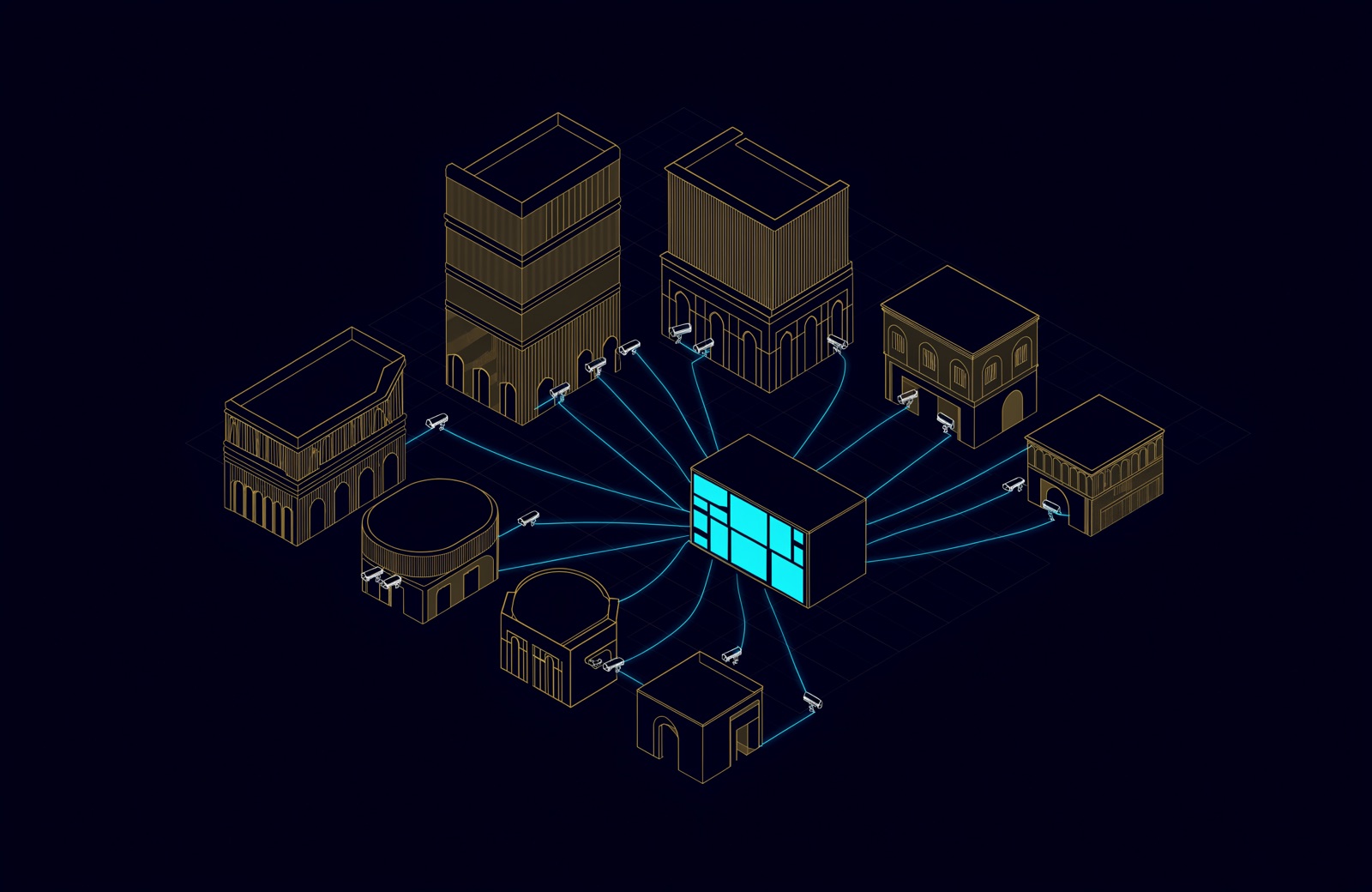
ADMCC CCTV regulations apply to the sites listed in the National Manual for Surveillance Systems (version 3.0, 2026): a licensed company designs, installs and maintains the system, approvals come before installation, footage is kept 30, 90 or 180 days by category, and an annual maintenance contract follows. Approval details come from Abu Dhabi's Monitoring and Control Centre (MCC).
This guide quotes MCC's own documents and website as published on 1 October 2026. It is not legal advice, and where a step is not written down publicly, we say so.
What is ADMCC, and where do its CCTV rules come from?
ADMCC is the name many people search for Abu Dhabi's Monitoring and Control Centre (the centre's own email domain is admcc.ae), which calls itself MCC. MCC's website says it was established in 2011 under the Executive Council of the Emirate of Abu Dhabi, moved under the Supreme National Security Council in 2019, and qualifies and licenses the companies that work with monitoring and control devices.
Its legal basis is Abu Dhabi Law No. 5 of 2011, which established the Centre, and Abu Dhabi Regulation No. 5 of 2015, dated 30 June 2015, which implements it. The technical rules are in documents MCC publishes in the Publications and Regulations section of its site, which changed on 22 September 2026:
| Document | Version and year | What it covers | Status on MCC's site, 1 October 2026 |
|---|---|---|---|
| National Manual for Surveillance Systems | 3.0, 2026 | Specifications, operating controls, coverage, plate readers and AI analytics, by site category | Listed, in English and Arabic |
| National Classification for Entities Licensed in the Field of Surveillance Devices | 1.0, 2026 | How licensed companies are graded, and which sites each grade may serve | Listed, in English and Arabic |
| Manual of Standards for Surveillance Devices | 2.0, 2023 | The previous technical manual | Superseded; no longer listed |
Both 2026 documents say the Arabic text prevails if the languages differ. Their covers name the concerned authorities: Abu Dhabi Police, Dubai's Security Industry Regulatory Agency (SIRA) and the police headquarters of the five northern emirates. In Abu Dhabi, MCC runs the licensing and compliance services described below.
Which sites must comply with the ADMCC CCTV standards?
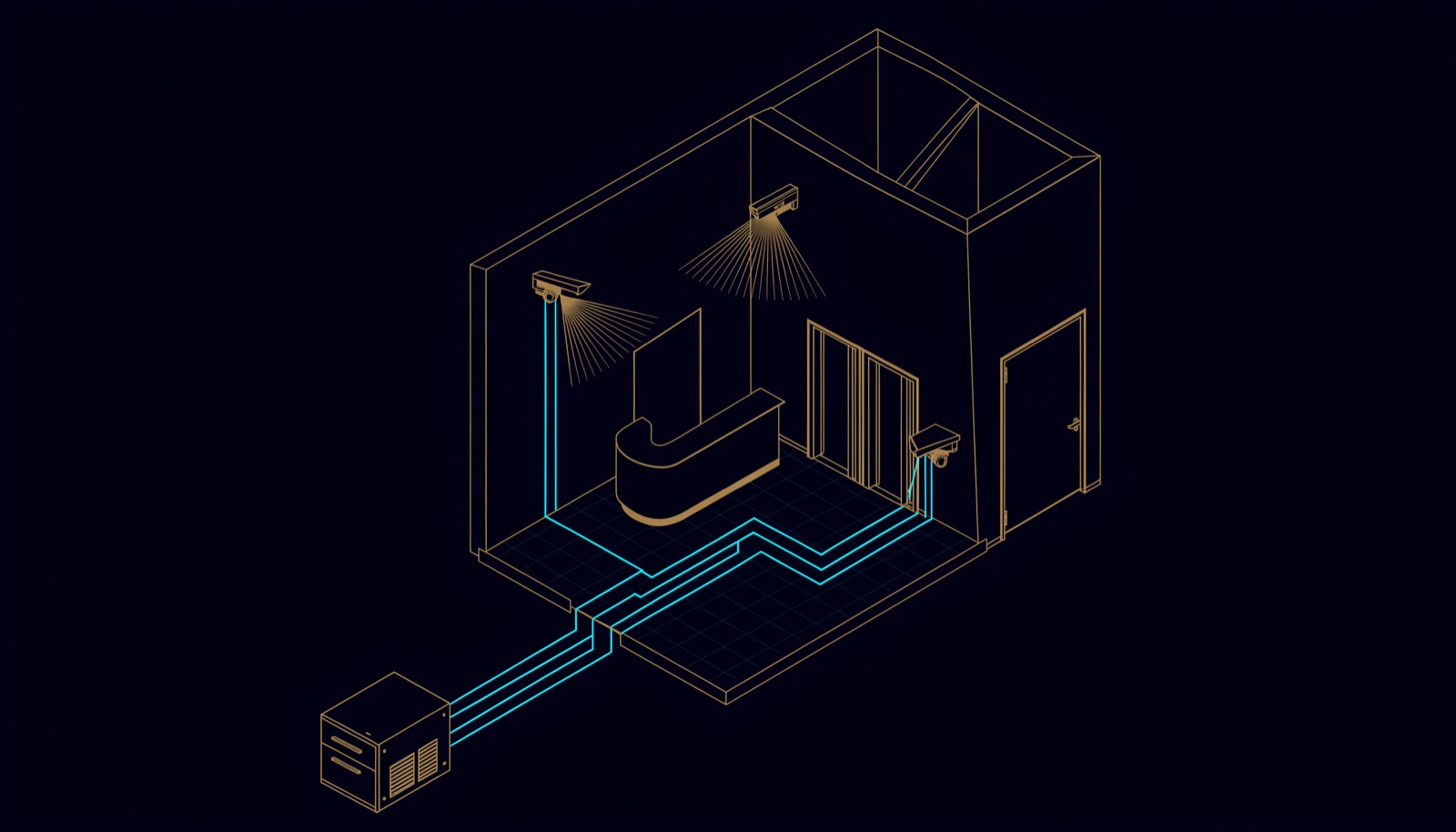
The government authorities and public and private entities in the manual's category table. The manual says they "shall comply with the standards, specifications and controls" it defines, and that design, installation, operation and maintenance "shall be carried out by one of the entities licensed by the concerned authorities." The table sets each category's group (Group B has stricter clauses), storage period, and whether a control room, an automatic number plate reader (ANPR) and AI video analytics are mandatory.
| Category (2026 National Manual) | Group | Storage (days) | Control room | ANPR | AI video analytics |
|---|---|---|---|---|---|
| Financial institutions (bonds and cheques); stores of precious, hazardous and medical materials; commercial stores specified by the authorities; key cutting stores; vehicle dealerships, showrooms and rentals; wedding and events halls; public gathering spaces and parks; marinas, docks, ferry terminals and water taxi stations; bus stop shelters; places of worship and religious educational centres; holiday homes; firearm stores and warehouses; public welfare associations | A | 30 | Optional | Optional | Optional |
| Government authorities; cinema complexes | A | 30 | Mandatory | Optional | Optional |
| Entertainment venues, gaming centres, food truck areas, sports clubs | A | 30 | Mandatory for entertainment venues | Mandatory for entertainment venues | Mandatory for entertainment venues |
| Football stadiums | A | 30 | Mandatory | Mandatory | Mandatory |
| Healthcare entities | A | 30 | Mandatory for hospitals | Mandatory for hospitals | Mandatory for hospitals |
| Buildings designated for vehicle parking | A | 30 | Optional | Mandatory | Optional |
| Money exchangers; precious metals and gemstones stores | A | 90 | Optional | Optional | Optional |
| Educational entities | A | 90 | Mandatory, except nurseries | Mandatory, except nurseries | Mandatory, except nurseries |
| Residential compounds, residential and commercial buildings | A | 90 | Optional | Mandatory | Optional |
| Fuel stations, EV charging stations, vehicle inspection centres | A | 90 | Optional | Mandatory for fuel and EV charging | Mandatory for fuel and EV charging |
| Exhibition halls; labour accommodation | A | 90 | Mandatory | Mandatory | Mandatory |
| Shooting ranges | A | 180 | Mandatory | Mandatory | Mandatory |
| Museums; places of public transport and ports | B | 90 | Mandatory | Mandatory | Mandatory |
| Hotels, hotel apartments and limited residential accommodation; shopping malls | B | 180 | Mandatory | Mandatory | Mandatory |
| Banks | B | 180 | Optional | Optional | Mandatory |
| Digital data storage and video recording centres | B | 180 | Mandatory | Optional | Optional |
The manual's notes add that the concerned authorities may add categories and set a category's storage period (minimum 30 days), and that ANPR is mandatory only where the facility has a designated parking area. MCC's published answers add that an entity with branches in other emirates applies the manual to all of them.
What ADMCC approval involves, step by step
MCC does not publish the route as one flowchart. This order is assembled from the manual, MCC's service catalogue and its published answers; times are MCC's stated service times.
- Confirm the category. MCC's Entity Compliance service is for entities that "fall under the categories targeted".
- Contract a licensed company. MCC: a contract must be made with a licensed company "to begin the procedures".
- Design to the manual. Coverage areas and levels, named cameras, and drawings that colour each field of view by level, provided in DWG on request.
- Obtain approval before installing. MCC: "The licensed company must obtain necessary approvals before the installation."
- Obtain the Compliance Certificate with the technical submittal documents. MCC's public pages do not say at which stage of the works it is issued, so confirm the sequence for your site.
- Keep it compliant: an annual maintenance contract, self-inspection reports from the licensed company, MCC's annual inspection and renewal.
| MCC service | What MCC asks for | Stated service time | Result |
|---|---|---|---|
| Entity Compliance | Commercial licence (if any), professional licence (if any), technical submittal documents | 20 working days | Compliance Certificate |
| Temporary Activity Permit, to operate until the site complies | Valid commercial licence (if any), a letter from the entity explaining the reasons | 4 working days | Temporary Permit Certificate |
| New Maintenance Contract, filed by the company | The contract with the entity; the entity must already hold a Compliance Certificate | 3 days | None stated by MCC |
| Renewal of Compliance Certificate | The maintenance contract; no fines or violations; adherence to the manual | 2 working days | Compliance Certificate |
MCC's catalogue lists its website as the channel for each service, and its answers confirm an annual inspection and that a violation must be corrected within the period it states. We found penalty amounts under Law No. 5 of 2011 only in secondary summaries and could not read the law's text from an official source, so we do not repeat them.
How long must CCTV footage be kept in Abu Dhabi?
30, 90 or 180 days by category, and never less than 30: the concerned authorities may set a duration, with 30 days as the minimum. The superseded 2023 manual used the same three periods and the same minimum.
The figure of 31 days comes from Dubai. SIRA's Preventive Systems Manual, approved by Administrative Resolution No. 13 of 2025, sets at least 31 days as its general minimum, with longer periods (60, 75 or 90 days) in some facility chapters. SIRA is also one of the concerned authorities named on the 2026 National Manual, so for a Dubai site confirm with SIRA which document it applies. For an Abu Dhabi site, use the MCC manual's table.
- Storage covers the full period plus at least 20% spare, and the oldest footage is overwritten first.
- Group A may record on motion with a pre-event buffer of at least 10 seconds, but identification cameras record continuously; Group B records continuously, 24/7.
- Group B adds RAID 5 or better on enterprise drives of at least 7,200 rpm, 30 days of failover storage, one failover server per four recording servers, and failover within two minutes.
Our CCTV systems guide for UAE businesses turns those periods into terabytes.
ADMCC CCTV standards: cameras, resolution and frame rate
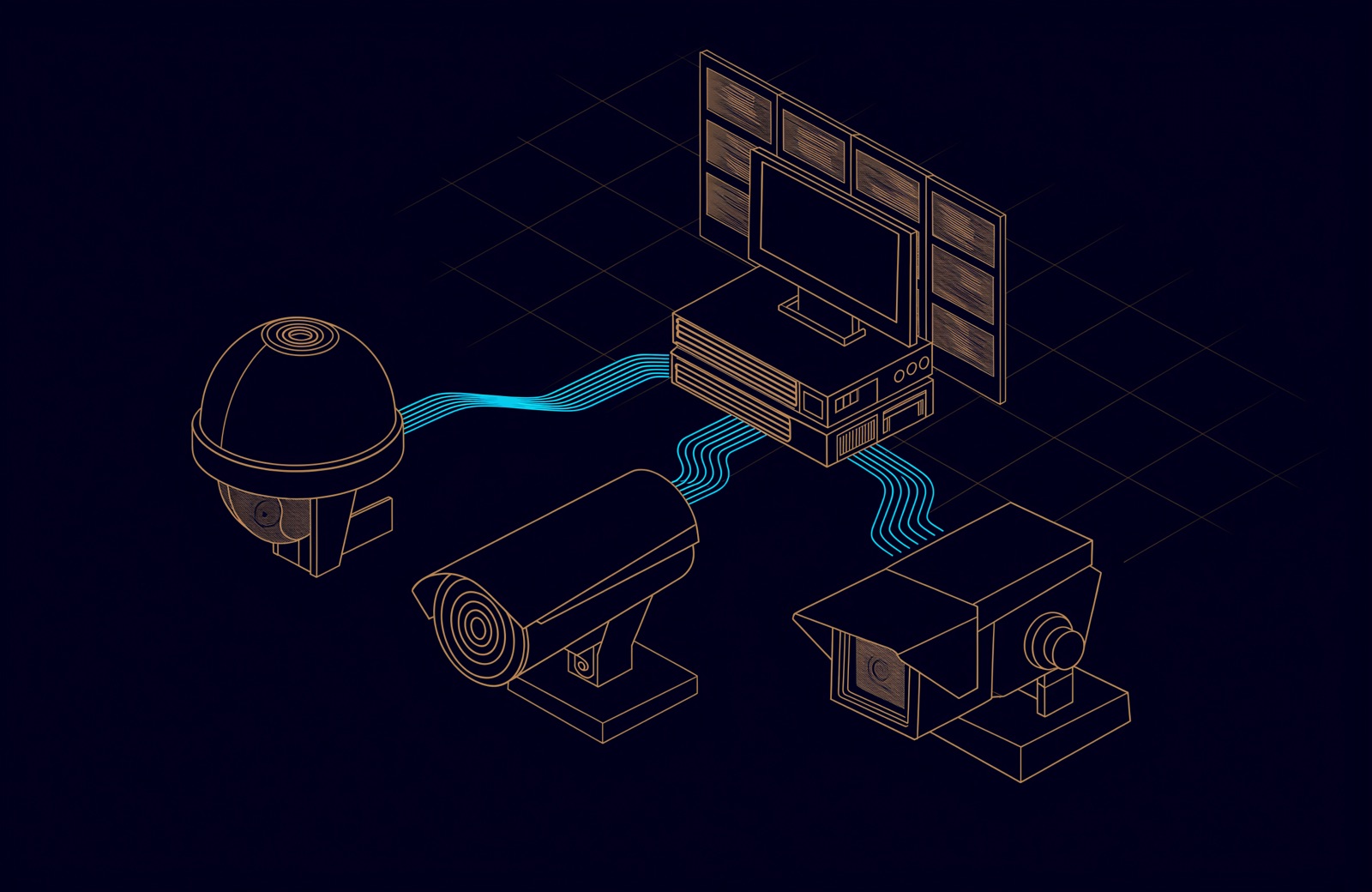
Only fixed IP cameras, at no less than 1920 x 1080, with IR matched to the view distance, H.264 or newer, IP66 outdoors and ONVIF Profile S or an approved alternative. Identification cameras, and any camera mounted 4 m or higher, need a motorised varifocal lens. Each area's level sets the density and frame rate:
| Coverage level | Example areas in the manual | Minimum density (px/m) | Minimum frame rate (fps) |
|---|---|---|---|
| Identification | Entrances and exits, emergency exits, cash points, control rooms | 500 at entrances | 25 |
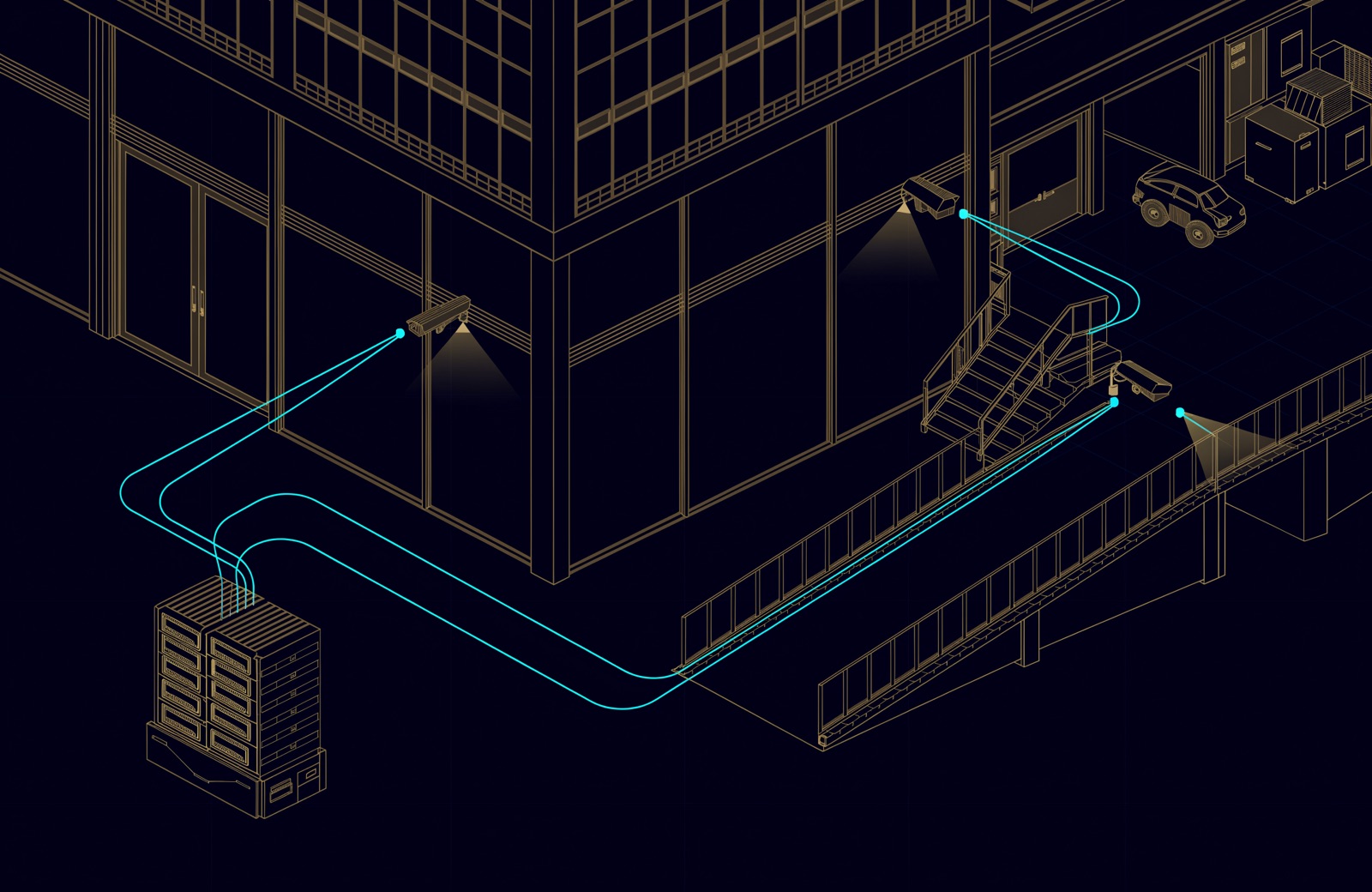
| Recognition | Lobbies, corridors, lifts and stairs, loading areas, kitchens | 125 | 12 |
| Observation | Building perimeter, ramps, assembly areas | 63.5 | 12 |
| Detection | Landscape and parking areas | 30 | 12 |
| Vehicle view and ANPR | Vehicle entrances and exits, drop-off areas | 500 | 25 |
The camera network must be dedicated and isolated, with MAC filtering, unused ports disabled, SNMP v3 only and time set to UAE time (UTC+4) from an approved NTP source; backup power must run the system for 30 minutes. See when CCTV becomes a network problem for bandwidth, and AI video analytics for CCTV for the categories that now need analytics.
What needs MCC's prior approval
Under the manual, prior approval from the concerned authorities is needed for:
- Adding or removing any camera.
- PTZ cameras, except for audience seating in football stadiums and entertainment venues, and border fences and airports.
- Wireless cameras, and audio recording (with a sign saying audio is recorded).
- A view beyond the site boundary or into private or restricted areas.
- Any public internet exposure, including remote management, cloud relay and vendor access, and any cloud hosting, backup or analytics.
- Powering systems off, deleting video, or removing devices from the control room.
MCC's answers add removing or shutting down devices for maintenance or closure, and linking branches over the internet. Hidden cameras are prohibited, footage is released only on an official letter from the competent or concerned authorities, and signs must be in Arabic, English and Urdu.
Who may install: licensed companies and the 2026 classification
A company licensed by MCC. Its catalogue requires a commercial licence that includes the activity "installing and maintaining security and surveillance equipment and devices" and at least one licensed engineer and one licensed technician, plus the company's employee list from the Ministry of Human Resources and Emiratisation, an ISO quality certificate and an In-Country Value (ICV) certificate.
Individuals are licensed separately: at least 18, a police clearance certificate, the qualification for the licence type (an engineering degree for engineers, a secondary certificate for technicians and operators), and MCC's theory and practical exams after a training course of five working days, taught in English.
The 2026 National Classification grades each licensed company Special, First, Second or Third on 100 points: technical staff 50%, workforce 15%, previous projects 15%, ICV 10% and ISO certificates 10%. Special needs 77 to 100 points, First 53 to 76, Second 29 to 52 and Third 7 to 28, and Special and First also need two years of audited accounts. A company may work only in the site categories its grade allows: of the 55 in the classification's eligibility list, Special may serve all 55, First 54 (all but airports), Second 39 and Third 13.
| Site category (examples) | Special | First | Second | Third |
|---|---|---|---|---|
| Airports | Yes | No | No | No |
| Hotels, shopping malls, banks, universities and colleges | Yes | Yes | No | No |
| Residential and commercial buildings, hotel apartments, private and public schools | Yes | Yes | Yes | No |
| Holiday homes, private hospitals, clinics and pharmacies, money exchangers, specified commercial shops | Yes | Yes | Yes | Yes |
The classification document says licensed entities and their grades are published on the authorities' website. On 1 October 2026, MCC's Licensed Companies list showed 701 companies, with the grade for each still "TBD". Ask any installer for its MCC licence, and for its grade once issued.
CCTV at home in Abu Dhabi
MCC's published answer to "Do I need to get approvals from MCC to install cameras at home?" is "No." A home let as a holiday home is different: holiday homes are a category in the manual, with 30 days of storage.
In November 2024, Abu Dhabi Police and MCC asked residents to use a licensed installation and maintenance company; to choose cameras with smartphone access, night vision and motion detection; to keep login details private and change the password often; and to keep the system somewhere safe from tampering. They named five areas to cover (entrances and exits, parking, storage, children's play areas and the outer wall), and asked people never to publish footage and to respect neighbours' privacy.
What changed from Manual v2.0 to the 2026 National Manual
A checklist that quotes "Manual of Standards for Surveillance Devices, version 2.0" is quoting the superseded 2023 document. The main differences:
| Topic | Manual v2.0 (2023, superseded) | National Manual v3.0 (2026) |
|---|---|---|
| Site groups | A, B and C | A and B |
| Storage periods | 30, 90 or 180 days by category; minimum 30 | Same periods and minimum; categories regrouped |
| Coverage levels | Identification, recognition, detection, vehicle view | Adds observation (63.5 px/m, 12 fps) and an operational level for optional areas |
| SNMP | v2c or v3 | v3 only; v1 and v2c prohibited |
| ANPR | 20 fps; 95% plate recognition, day and night | 25 fps; 98% plate recognition, day and night |
| AI video analytics | Group C recorders able to integrate with analytics | A full section, mandatory for listed categories |
| Installer grades | Not in the manual | Separate National Classification, version 1.0 |
How UBM handles it
UBM designs and installs IP CCTV as part of its security and network work, and on an Abu Dhabi project the manual is the design brief. Before anything is ordered, we agree the site's category with the client, list the mandatory areas and their levels, and draw each camera's field of view in the manual's colours. Storage is sized to the category's period plus 20%, and the camera network is a dedicated, hardened network with its PoE budget and time source on the drawings. We confirm the approval route and the order of submissions with MCC at the start, and hand over the camera schedule, drawings and configuration record the manual asks the site to keep. See our CCTV and physical security work, or talk to a UBM engineer about your site.
Questions people ask
Do I need ADMCC approval to install CCTV in Abu Dhabi?
Yes, if your site is in one of the manual's categories: a licensed company must obtain approval before installation, and no camera may be added or removed without prior approval. MCC says homes do not need its approval.
How long must CCTV footage be kept in Abu Dhabi?
30, 90 or 180 days depending on the category, never less than 30. Hotels, malls and banks keep 180 days; schools and residential and commercial buildings keep 90.
Is the ADMCC manual v2.0 still valid?
It has been superseded. MCC added the National Manual for Surveillance Systems, version 3.0, on 22 September 2026 and no longer lists version 2.0. Confirm with MCC how the change applies to an existing system.
How do I check whether a CCTV company is ADMCC licensed?
Look it up on the Licensed Companies list on MCC's website and ask for its licence. Grades under the 2026 classification were not yet shown on 1 October 2026.
Does the ADMCC manual apply to branches in other emirates?
MCC's answer is yes: an entity with branches in other emirates applies the manual to all of them. In Dubai, also confirm with SIRA which manual applies.
Is a CCTV maintenance contract mandatory?
Yes, for sites in the manual's categories: an annual corrective and preventive maintenance contract with a company registered by the concerned authorities. Renewing the Compliance Certificate requires it.
Sources
- Monitoring and Control Centre: National Manual for Surveillance Systems, version 3.0, and National Classification for Entities Licensed in the Field of Surveillance Devices, version 1.0 (Publications and Regulations); service catalogue; frequently asked questions; Licensed Companies list; About MCC (MCC, 2026, checked 1 October 2026)
- Manual of Standards for Surveillance Devices, version 2.0 (MCC, 2023; superseded, no longer listed on MCC's site)
- Abu Dhabi Regulation No. 5 of 2015 Implementing Abu Dhabi Law No. 5 of 2011 on the Establishment of the Monitoring and Control Centre (2015)
- Administrative Resolution No. 13 of 2025 Approving the Preventive Systems Manual (Security Industry Regulatory Agency, Dubai, 2025)
- Abu Dhabi Police and the Monitoring and Control Centre call on the public to follow home surveillance system controls under the slogan "Be reassured" (Abu Dhabi Police, 22 November 2024, in Arabic)

Comments
Questions and experience from readers. A person reads every comment before it appears.
No comments yet. If something here does not match what you have seen on site, say so.